
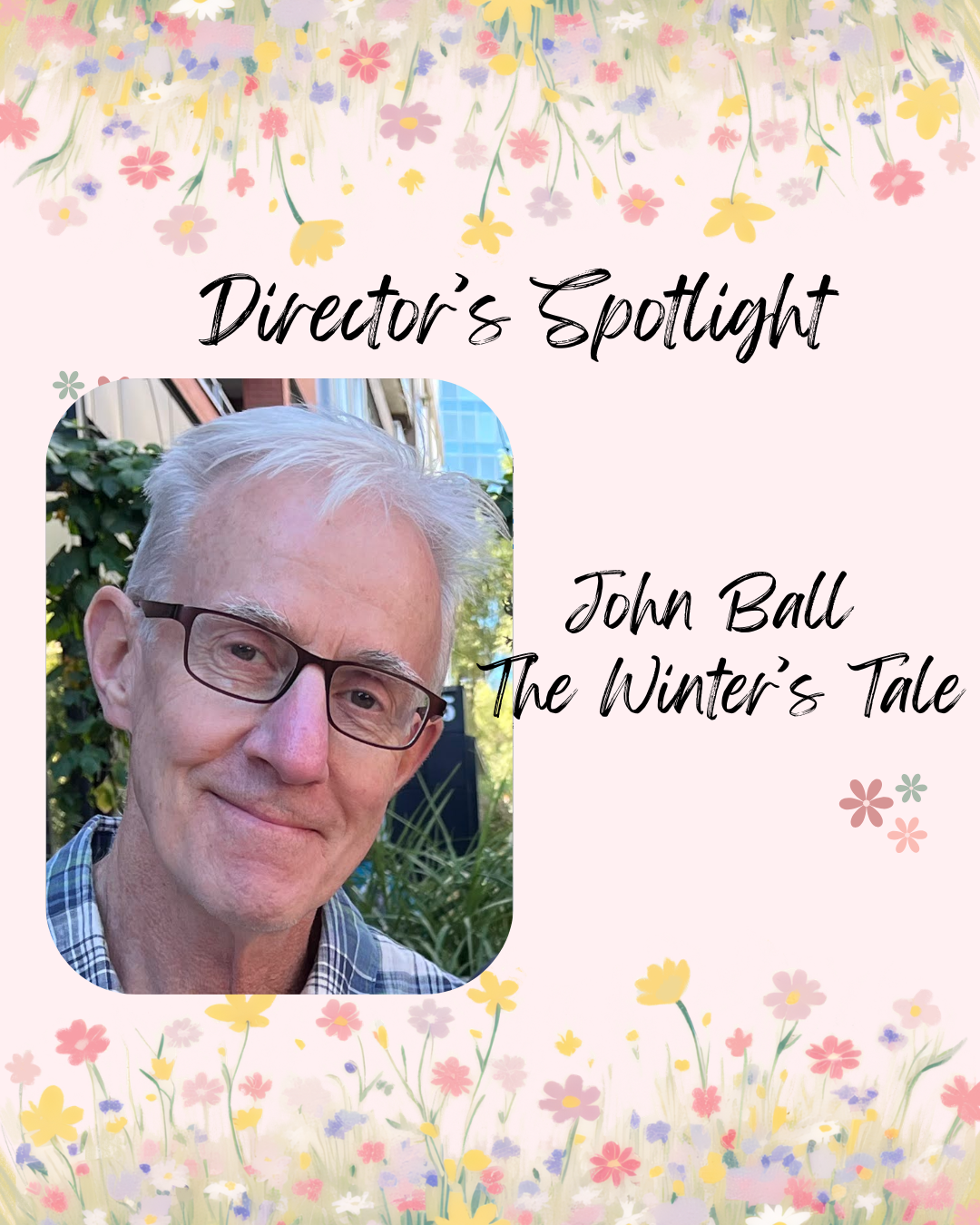
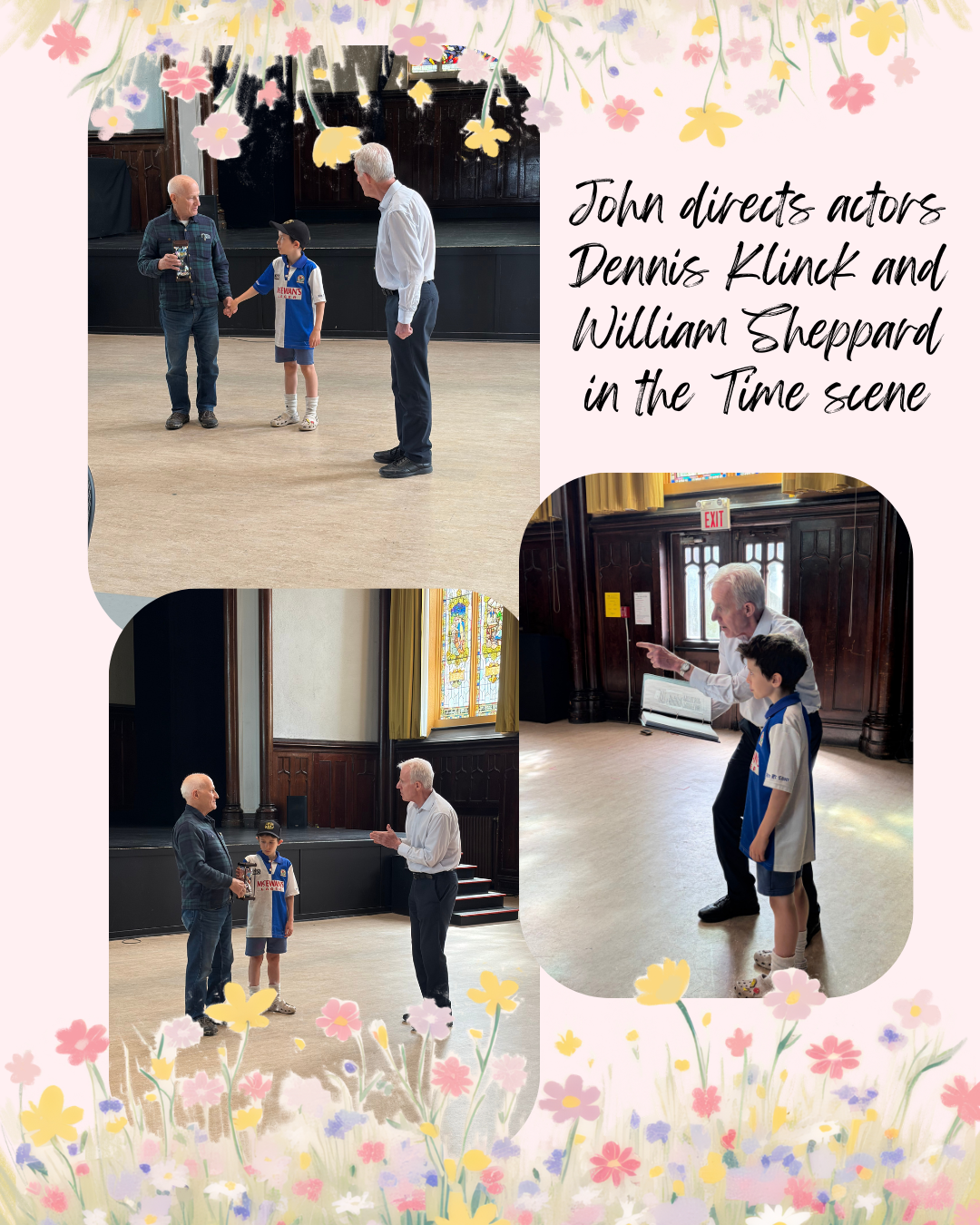
John Ball, director of The Winter’s Tale, shares some thoughts on the show.
Q – Why did you want to direct The Winter’s Tale for Bard in the Barracks this year?
A – Several reasons: it tells a beautiful, engrossing, and moving story of betrayal and reconciliation; it’s been a favourite since I acted in it as an undergrad over 40 years ago; this is our 20th-anniversary season and Bard has never done The Winter’s Tale; it was named one of the top 10 Shakespeare plays to see in a recent Guardian list (as was Love’s Labour’s Lost); finally, the play is full of excellent roles for actors of all ages, and with our amazing talent pool here in Fredericton I saw an opportunity for a truly intergenerational cast (ours ranges from 8 to 80) to take on some wonderful characters.
Q – What makes the play stand out for you?
A – It’s one of the last Shakespeare wrote: a late romance often grouped with The Tempest, Pericles, and Cymbeline, all of which Bard has staged successfully in the past decade. The Winter’s Tale’s story of a king’s sudden fit of irrational jealousy, and the consequences that flow from his suspicions and accusations, shares those other plays’ interests in family conflict, reunions and reconciliations across vast spans of time and space, and their free, exploratory intermingling of the tragic and comic modes that Shakespeare had practiced so expertly, but mostly separately, across his career. Although winter is in the title, we’re doing it in summer, and the play moves from a wintry mood in the courtly opening scenes, which seem headed for tragedy, to a more spring- and summer-like mood in the middle as time passes and some wild plot-twists take it in the direction of festive, pastoral comedy; and in the autumnal, closing act to a magical and bittersweet resolution. Our production aims to reflect those varied moods visually and tonally.
Q – What are the biggest challenges the play presents to a director?
A – Leontes’s jealousy seems to spring out of nowhere at the beginning – there is no Iago figure goading him on or planting false evidence, so the actor and director need to find their own approach to making it as believable and horrifying as possible. A distinctive feature of The Winter’s Tale is the character of Time, who begins Act 4 by saying how he “makes and unfolds error” and who appears as a character to explain that 16 years have passed during the intermission: a newborn in the first half is now a teenager in love.
Q – And of course, there’s a bear!
A – Yes! A big challenge is the play’s notorious stage direction (probably Shakespeare’s most famous) in which the lord Antigonus has to “Exit pursued by a bear”; every director must figure out what to do with that scene, which is also a key moment where the play’s tragic first half pivots toward the comic restoration and reconciliation of the second. We’ve come up with what I think is an original, fun take on the bear that complements the play’s intergenerational themes. How? Come see it to find out!
Q – You mentioned the all-ages cast – can you say more?
A – We have a mix of Bard veterans – Scott Shannon (Leontes) acted with me in the first Bard production in 2006; Scott Harris (Old Shepherd) has been with us every year since 2017 – and new recruits. I’ve had the amazing Sally Dibblee in mind for Paulina for years and am thrilled she’ll perform it as her first Shakespeare role. Shannon Munn (Hermione) debuted in Bard last year as a merry wife of Windsor; Ryan Griffith (Polixenes) last did a Bard show 15 years ago, though he’s been an active playwright and producer/director in Fredericton for decades. We have lots of younger actors, with Sophie Brander and Dino Andriani as a charming Perdita and Florizel, and Esther Soucoup as the shape-shifting, pick-pocketing Autolycus sure to get laughs. As a director who’s loved this play for over 40 years, I’ve cast a young boy and folks from their 20s to their 80s to palpably embody the passage of time and, with Bard itself a generation old, the play’s theme of what future generations inherit from past ones.

